Home / Tobias Zuberbühler 

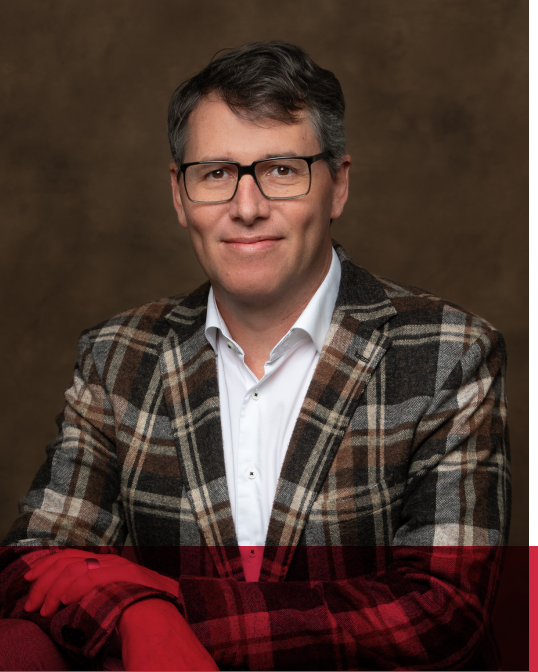
Tobias Zuberbühler

Tobias Zuberbühler has over 25 years of experience in dispute resolution and has acted as arbitrator and counsel in more than 100 international and domestic arbitration proceedings under various rules (ICC, Swiss Rules, DIS, CEPANI, VIAC, HKIAC). He has also rendered over 350 UDRP decisions as WIPO Domain Name Panelist.

Tobias is a former member of the Arbitration Court of the Swiss Arbitration Centre, co-editor of the Commentary on the Swiss Rules of International Arbitration (3rd ed 2023) and co-author of a leading commentary on the IBA Rules of Evidence. He is recommended by Who’s Who Legal as one of the world’s foremost practitioners in international arbitration (Thought Leaders – Arbitration 2025).

After 17 years as partner in an arbitration/litigation boutique, Tobias Zuberbühler has started his own practice as independent arbitrator in order to focus more on his arbitrator work.

Tobias graduated from the University of Zurich Law School (lic. iur.) and holds an LL.M. degree in International Legal Studies from Golden Gate University, San Francisco. He is fluent in German, English (7 years USA) and French.

Experience & Education

2023 - today

Zuberbühler Arbitration, Winterthur

2005 - 2023

Partner at Lustenberger + Partners, Zurich

2011 - 2012

Anti-Corruption Officer, Credit Suisse AG, Zurich

1999 - 2005

Senior Associate at MME Partners, Zurich

1997 - 1998

Junior Associate at Wyler & Lustenberger, Zurich 

1999

Zurich Bar, Admitted to all Swiss Courts

1996

LL.M. International Legal Studies, Golden Gate University, San Francisco

1994

lic. iur., University of Zurich

January - Album of the Month

FD5_2013_final

BAND – Bob Dylan

Album – The Freewheelin’ Bob Dylan

Bob Dylan was born into a liberal Jewish family in rural Minnesota on 24 May 1941 (four weeks before Hitler attacked the Soviet Union in Operation Barbarossa). He studied arts in Minneapolis (where people are clashing again with the U.S. government these days) before moving to Greenwich Village in 1961 to perform folk songs of Woody Guthrie and others and mingle with the beatnik hipsters of New York. Dylan’s girlfriend Suze Rotolo (featured on the cover photo of the album), whose parents were members of the American Communist Party, nudged him towards left-wing politics.

Following an unsuccessful first album of folk cover versions, Dylan was signed by Columbia Records and started recordings for “The Freewheelin’ Bob Dylan” in May 1962, at the age of 21. Combining the fury of beat poets with folk guitars, Bob Dylan became the first musician to write protest songs. “Blowin’ in the Wind” (an adaptation of the 1830s Negro spiritual “No More Auction Block” which became an anthem of the civil rights movement of the 1960s), “Masters of War” (an first attack against the U.S. military-industrial complex) and “A Hard Rain’s a-Gonna Fall” (one of Dylan’s most complex songs first performed live at Carnegie Hall on 22 September 1962, one month before the Cuban Missile Crisis) have set the tone as anti-war classics until today. My favorite is “Hard Rain”, which confronts gentle folk guitar strumming with incredible lyrics in which every single line sets off an explosion in your head. The album was finally issued in May 1963 and became a big success after Peter Paul and Mary’s rendition of “Blowin’ in the Wind” reached No. 2 of the Billboard Charts. 

With his mixture of moral authority and nonconfirmity, Bob Dylan has remained an enigmatic idol for generations, pushing away the many non-initiated who have bought tickets for his incredibly uncompromising concerts (where even music fans like me sometimes have not recognized a single song) only to walk out in anger. 

I like the fact that some artists still do not give a shit about audience expectation and just play what they feel like. Another example is the ex-Velvet John Cale who had a vicious performance some years ago in the Kaufleuten Zurich, during which 2/3rds of the audience walked out before he played one Velvet Underground song, only to return to pure noise and videos of Bosnian concentration camps thereafter. Uff. Of course, it helps to be old and world famous in these situations.

Unlike some well-known authors (who might have been hoping for the prize themselves), I think Bob Dylan deserved the Nobel Prize for Literature in 2016 (even though my favorite writer, Haruki Murakami, was No. 1 for the bookies). It is a myth that he refused the prize. Dylan merely declined to appear for the official ceremony in December due to other (as yet undisclosed) commitments (and supposedly to avoid the spotlight he has always hated). His acceptance speech was held in May 2017, shortly before the deadline of six months elapsed to collect the prize money.

FD5_2013_final